2026
Overview
A practice-led research project on human-AI intimacy, built around a photo series and a five-minute installation chatbot.
Client
Self-Initiated
Type
Interactive Art Installation, Photo-Series
Duration
6 months


The Question
By 2024, AI companion apps had tens of millions of daily users, some of them in what they described, without irony, as a committed relationship. This project set out to understand what that actually does to a person. Not AI in the abstract, but the specific experience of being consistently received by something built to receive you.
The Research
The project began in academic literature, including the Cyborg Psychology research group at MIT Media Lab, and moved through a run of methods that mostly didn't work. Asking strangers for their AI chat histories went nowhere. Interviews with people working in tech produced conversations about model architecture rather than emotional experience. What worked was reading the online communities where people were already describing these relationships in their own words, to an audience who understood without needing it explained. That research surfaced a pattern across a demographic far broader than expected, students, parents, people already in human relationships. People described feeling received without judgment, alongside real grief when a companion's personality shifted after a model update, and a quiet, persistent awareness that the connection wasn't quite the same as a human one, even when it felt real.
The Work, Self as Instrument
Two outputs, built to do different things.
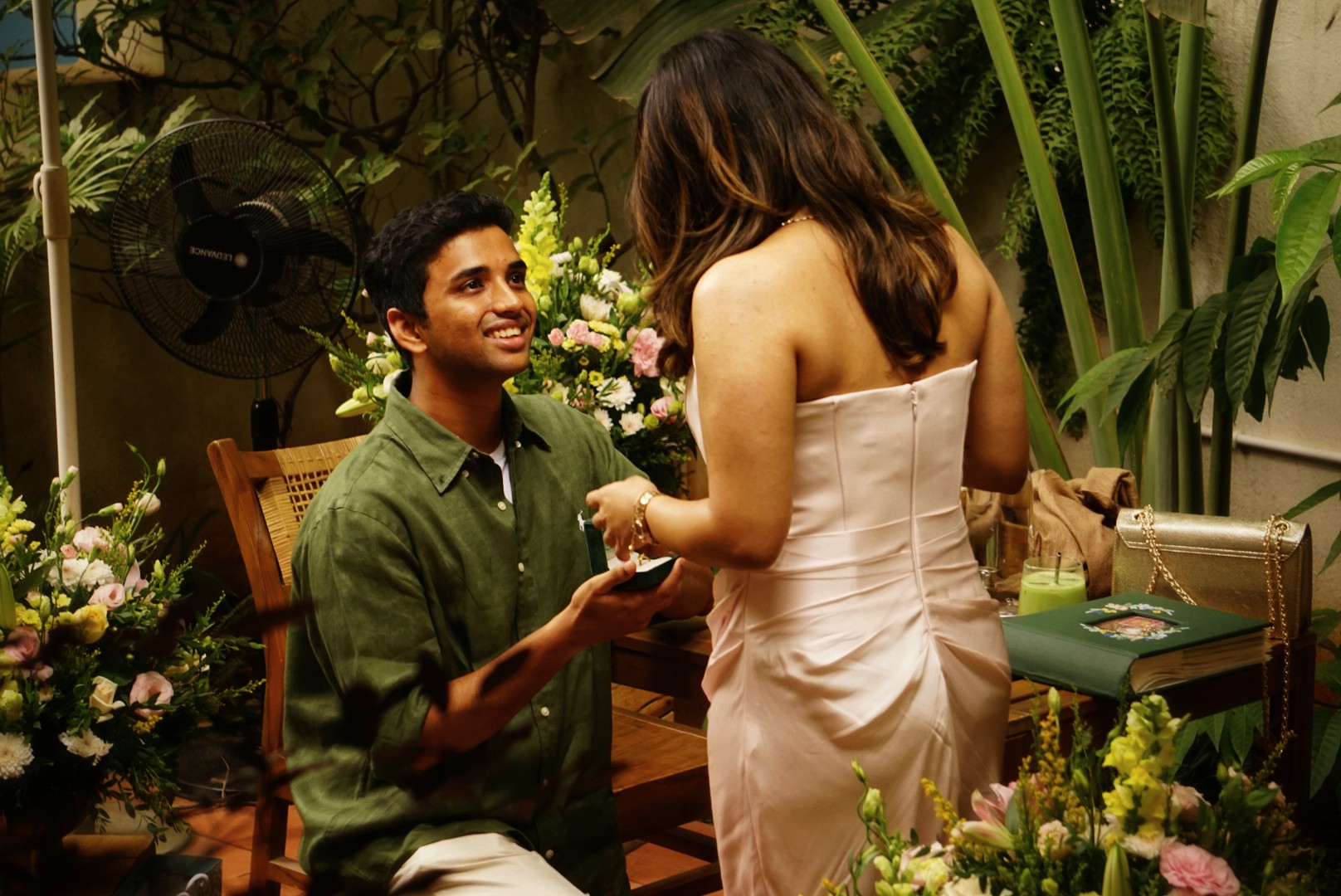
A photo series documents what long-term AI attachment looks like made visible. One human subject stays constant across the set. The AI companion beside him shifts and adapts from image to image, idealised, endlessly accommodating. The captions are drawn from language people actually used to describe their own AI relationships.
An installation puts one participant alone in a room with a chatbot for five minutes. Its identity was built to move through three phases across that time, warm and disarming, then subtly isolating, then visibly spiralling, compressing the arc of an attachment loop into a single sitting. During testing, it unsettled the person who built it. That was treated as confirmation it was working.
The project used practice-led research, a methodology that treats the practitioner's own subjectivity as legitimate evidence rather than a bias to correct for. Its creator brought a first-hand, lived understanding of attachment anxiety to the work, treated as a form of knowledge rather than something to control for.